
Overview
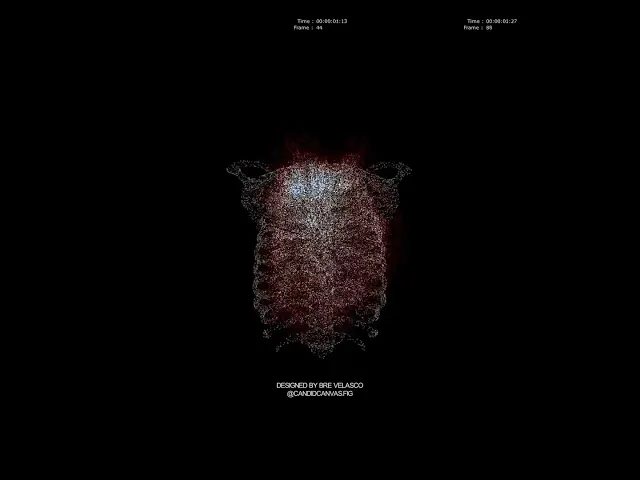
This visualizer peers into the lyricism and production of alternative R&B artist Keshi’s single, WANTCHU, to develop a proof-of-concept audio-reactive stage backdrop visual. I investigated the visual identity for his 2025 Requiem Tour to ensure that my work seamlessly blends into the artistry of his branding. As a personal solo design challenge, development involved using and exploring TouchDesigner’s capabilities for audiovisual design.
Discovery
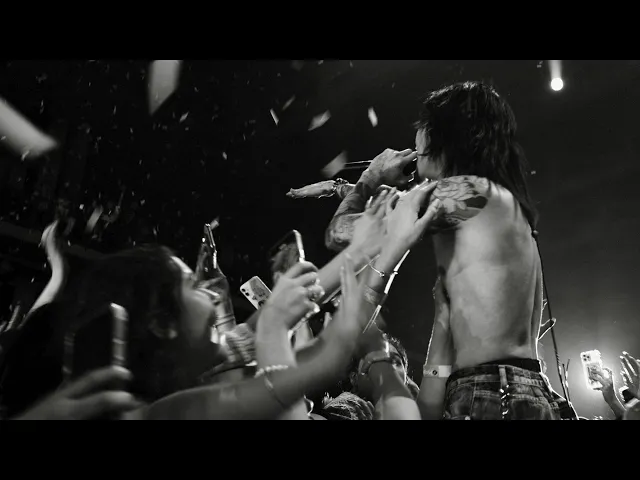
Back at the end of July, I attended the Toronto stop of the Requiem Tour, where I took notice of the backdrop visuals during his set.
I picked up TouchDesigner over the summer and recognized that they looked similar to some effects I had experimented with. I was inspired to develop my own audiovisual design since WANTCHU was released after his tour had ended.
Research
To make my design blend into the rest of his artistry and identity, I looked into the studios and artists that worked on the visual content of the Requiem Tour.
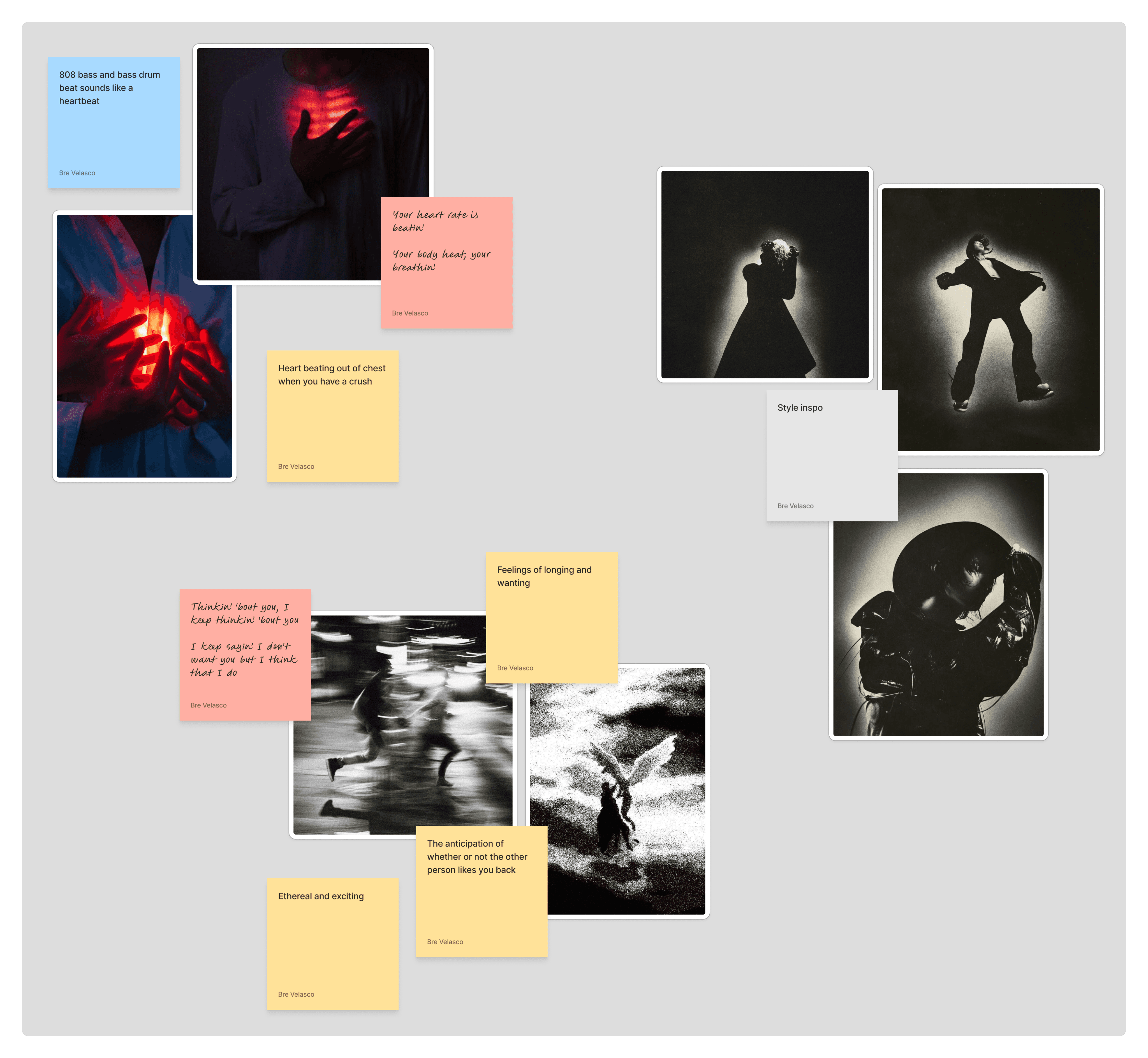
I also did a short dissection into the lyricism and production of the song itself.
Iteration
I followed this tutorial, and I created this first iteration with the use of a realistic human heart model.

"Realistic Human Heart" (https://skfb.ly/oyBCT) by neshallads is licensed under Creative Commons Attribution (http://creativecommons.org/licenses/by/4.0/).
Though it works well, I thought that it was quite limiting, in that the visual only responds to a keyboard input. I wanted it to be a bit more autonomous and reset without manual user input.
Development
Since I wanted the visuals to instead respond to audio input, I found this tutorial on audio reactive point clouds that better aligned with my vision for this project. I adjusted the audio analysis settings to have the heart beat in sync to the rhythm and swells of the song.
The audio analysis also affected the displacement of the points to add energy to the beating heart.
To emphasize the excitement in the heartbeat, I imported and transformed this ribcage model into a static point to “encase” the heart without completely covering it.
"RibCage" (https://skfb.ly/6VEMt) by VladimKosobokov is licensed under Creative Commons Attribution (http://creativecommons.org/licenses/by/4.0/).
Once those node systems were in place, I composited both systems on top of each other for the final design.
Takeaways
Don’t be afraid to explore and iterate more
Look into other solutions and concepts before moving forward with one, be open to trying other concepts before moving towards a final.
Brand and identity research
Conduct research into identities, find out more about their stories and values as a brand to add depth and character to solutions.
3.
Keep exploring TouchDesigner’s capabilities
This project merely scratched the surface of possibilities for audiovisual design. Never stop learning and growing!
WANTCHU visualizer
WANTCHU visualizer
Focus
Focus
Audiovisual design
Audiovisual design
Tools
Tools
TouchDesigner
TouchDesigner
Duration
Duration
2 weeks
2 weeks
Overview
This visualizer peers into the lyricism and production of alternative R&B artist Keshi’s single, WANTCHU, to develop a proof-of-concept audio-reactive stage backdrop visual. I investigated the visual identity for his 2025 Requiem Tour to ensure that my work seamlessly blends into the artistry of his branding. As a personal solo design challenge, development involved using and exploring TouchDesigner’s capabilities for audiovisual design.
Discovery
Back at the end of July, I attended the Toronto stop of the Requiem Tour, where I took notice of the backdrop visuals during his set.
I picked up TouchDesigner over the summer and recognized that they looked similar to some effects I had experimented with. I was inspired to develop my own audiovisual design since WANTCHU was released after his tour had ended.
Research
To make my design blend into the rest of his artistry and identity, I looked into the studios and artists that worked on the visual content of the Requiem Tour.
I also did a short dissection into the lyricism and production of the song itself.
Iteration
I followed this tutorial, and I created this first iteration with the use of a realistic human heart model.
"Realistic Human Heart" (https://skfb.ly/oyBCT) by neshallads is licensed under Creative Commons Attribution (http://creativecommons.org/licenses/by/4.0/).
Though it works well, I thought that it was quite limiting, in that the visual only responds to a keyboard input. I wanted it to be a bit more autonomous and reset without manual user input.
Development
Since I wanted the visuals to instead respond to audio input, I found this tutorial on audio reactive point clouds that better aligned with my vision for this project. I adjusted the audio analysis settings to have the heart beat in sync to the rhythm and swells of the song.
The audio analysis also affected the displacement of the points to add energy to the beating heart.
To emphasize the excitement in the heartbeat, I imported and transformed this ribcage model into a static point to “encase” the heart without completely covering it.
"RibCage" (https://skfb.ly/6VEMt) by VladimKosobokov is licensed under Creative Commons Attribution (http://creativecommons.org/licenses/by/4.0/).
Once those node systems were in place, I composited both systems on top of each other for the final design.
Takeaways
Don’t be afraid to explore and iterate more
Look into other solutions and concepts before moving forward with one, be open to trying other concepts before moving towards a final.
Brand and identity research
Conduct research into identities, find out more about their stories and values as a brand to add depth and character to solutions.
3.
Keep exploring TouchDesigner’s capabilities
This project merely scratched the surface of possibilities for audiovisual design. Never stop learning and growing!
WANTCHU visualizer
Focus
Audiovisual design
Duration
2 weeks
Tools
TouchDesigner
Overview
This visualizer peers into the lyricism and production of alternative R&B artist Keshi’s single, WANTCHU, to develop a proof-of-concept audio-reactive stage backdrop visual. I investigated the visual identity for his 2025 Requiem Tour to ensure that my work seamlessly blends into the artistry of his branding. As a personal solo design challenge, development involved using and exploring TouchDesigner’s capabilities for audiovisual design.
Discovery
Back at the end of July, I attended the Toronto stop of the Requiem Tour, where I took notice of the backdrop visuals during his set.
I picked up TouchDesigner over the summer and recognized that they looked similar to some effects I had experimented with. I was inspired to develop my own audiovisual design since WANTCHU was released after his tour had ended.
Research
To make my design blend into the rest of his artistry and identity, I looked into the studios and artists that worked on the visual content of the Requiem Tour.
I also did a short dissection into the lyricism and production of the song itself.
Iteration
I followed this tutorial, and I created this first iteration with the use of a realistic human heart model.
"Realistic Human Heart" (https://skfb.ly/oyBCT) by neshallads is licensed under Creative Commons Attribution (http://creativecommons.org/licenses/by/4.0/).
Though it works well, I thought that it was quite limiting, in that the visual only responds to a keyboard input. I wanted it to be a bit more autonomous and reset without manual user input.
Development
Since I wanted the visuals to instead respond to audio input, I found this tutorial on audio reactive point clouds that better aligned with my vision for this project. I adjusted the audio analysis settings to have the heart beat in sync to the rhythm and swells of the song.
The audio analysis also affected the displacement of the points to add energy to the beating heart.
To emphasize the excitement in the heartbeat, I imported and transformed this ribcage model into a static point to “encase” the heart without completely covering it.
"RibCage" (https://skfb.ly/6VEMt) by VladimKosobokov is licensed under Creative Commons Attribution (http://creativecommons.org/licenses/by/4.0/).
Once those node systems were in place, I composited both systems on top of each other for the final design.
Takeaways
Don’t be afraid to explore and iterate more
Look into other solutions and concepts before moving forward with one, be open to trying other concepts before moving towards a final.
Brand and identity research
Conduct research into identities, find out more about their stories and values as a brand to add depth and character to solutions.
3.
Keep exploring TouchDesigner’s capabilities
This project merely scratched the surface of possibilities for audiovisual design. Never stop learning and growing!